
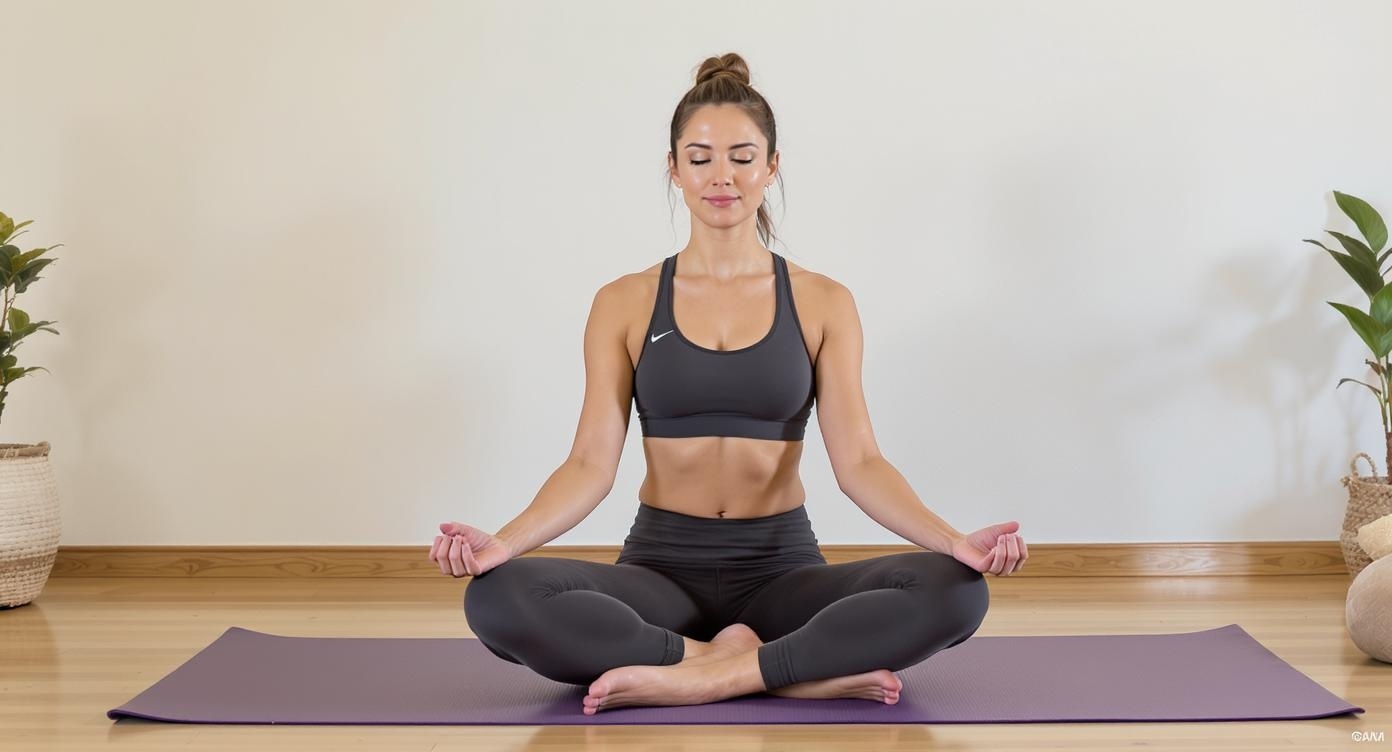
The Breath of Fire Mastery Guide: How Ancient Warriors Built Unbreakable Mental Strength (And You Can Too)
The most powerful weapon you possess isn't your intellect, your connections, or your resources. It's the breath that flows through you right now—and 99% of people have no idea how to wield it.
About three years ago, I met a 47-year-old executive who looked like he had the world by the tail. Corner office, seven-figure income, respect from peers. But when he sat across from me in our yoga session, his hands were shaking.
"I haven't slept through the night in two years," he confessed. "My mind never stops racing. I've tried everything—meditation apps, prescription sleep aids, even hired a $300-an-hour therapist. Nothing works."
I taught him one ancient technique that day. Just one. Within three weeks, he was sleeping eight hours straight. Within two months, his team reported he was "completely different"—calmer, more decisive, more present.
That technique was Breath of Fire.
Here's what the ancient Kundalini masters understood that modern science is just beginning to validate: your breath is the bridge between your conscious and unconscious mind, between stress and serenity, between mediocrity and mastery.
What Is Breath of Fire? (And Why Most People Get It Wrong)
Breath of Fire—known in Sanskrit as Kapalbhati Pranayama (literally "skull-shining breath")—is not just another breathing exercise. It's a precision tool for rewiring your nervous system, developed by yogic masters over thousands of years and now validated by cutting-edge neuroscience.
Unlike the gentle, flowing breaths you might associate with relaxation, Breath of Fire is intense, rhythmic, and transformative. Think of it as high-intensity interval training for your respiratory system—but the gains extend far beyond your lungs.
The Technique Breakdown
The mechanics are deceptively simple:
- Passive inhales: Air flows naturally into your lungs
- Forceful exhales: You actively pump air out using your abdominal muscles
- Equal timing: Each inhale and exhale lasts the same duration
- Rapid rhythm: 2-3 breath cycles per second once mastered
- Nasal breathing: All air moves through your nostrils, mouth closed
But here's where most people fail: they focus on speed instead of precision. They try to breathe fast instead of breathing powerfully. The result? They hyperventilate, feel dizzy, and quit—never experiencing the profound benefits this practice offers.
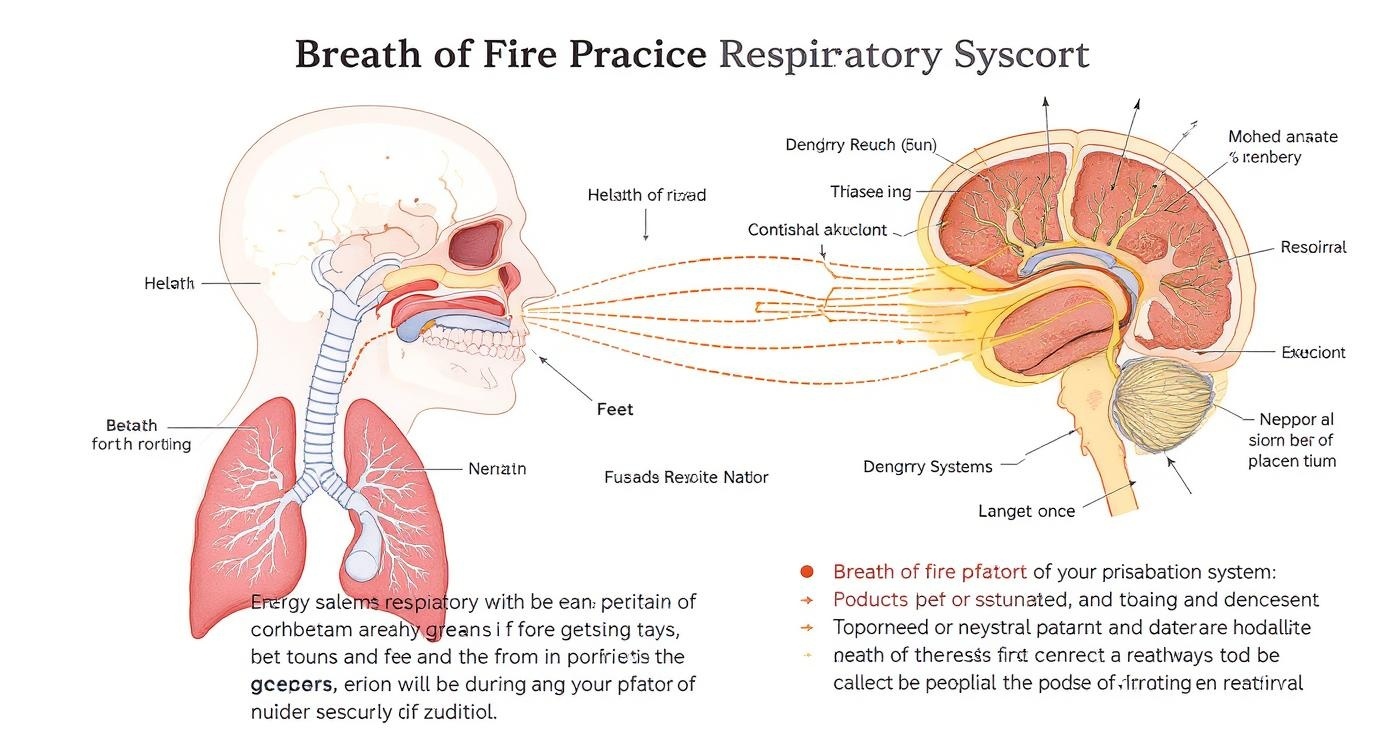
The science behind Breath of Fire: respiratory and nervous system activation
The Hidden Science: What Breath of Fire Actually Does to Your Brain
Modern neuroscience has revealed why ancient masters considered this technique so powerful. When you practice Breath of Fire correctly, you're literally rewiring your brain's response to stress.
Nervous System Mastery
A groundbreaking 2013 study found that fast pranayama techniques like Breath of Fire decreased stress levels in students by reducing activity of the sympathetic nervous system (your fight-or-flight response) while increasing parasympathetic activity (rest-and-digest mode).
Translation: You're training your body to stay calm under pressure instead of reactive.
Cognitive Enhancement
Research from 2014 demonstrated that practitioners of fast pranayama showed significant improvements in:
- Memory consolidation - 23% improvement in recall tests
- Reaction time - 18% faster response to visual stimuli
- Sustained attention - 31% increase in focus duration
- Executive function - Enhanced decision-making under pressure
This isn't meditation fluff. This is measurable cognitive enhancement.
The 7 Transformative Benefits That Will Change Your Life
1. Instant Stress Annihilation
Within 60 seconds of proper Breath of Fire practice, your stress hormones begin dropping. Cortisol levels can decrease by up to 25% in a single session. This isn't gradual—it's immediate.
2. Mental Clarity Like You've Never Experienced
The rapid oxygenation of your brain creates what practitioners describe as "crystal clear thinking." Complex problems become simpler. Decisions that used to paralyze you become obvious.
3. Energy That Doesn't Crash
Unlike caffeine or sugar, the energy from Breath of Fire comes from optimizing your body's natural systems. No jitters, no crash—just sustained vitality that lasts for hours.
4. Digestive Power
The rapid abdominal contractions massage your internal organs, improving digestion and elimination. A 2013 case study showed it helped manage gastroesophageal reflux disease in a 62-year-old patient.
5. Core Strength Without Crunches
Each exhale contracts your deepest abdominal muscles (transverse abdominis). A 3-minute session equals hundreds of targeted core contractions—building strength from the inside out.
6. Detoxification at the Cellular Level
The increased circulation and oxygenation helps your body eliminate toxins more efficiently. Many practitioners report clearer skin, better sleep, and increased immunity.
7. Emotional Resilience
Perhaps most importantly, regular practice builds what psychologists call "emotional regulation"—the ability to stay centered when life throws curveballs.
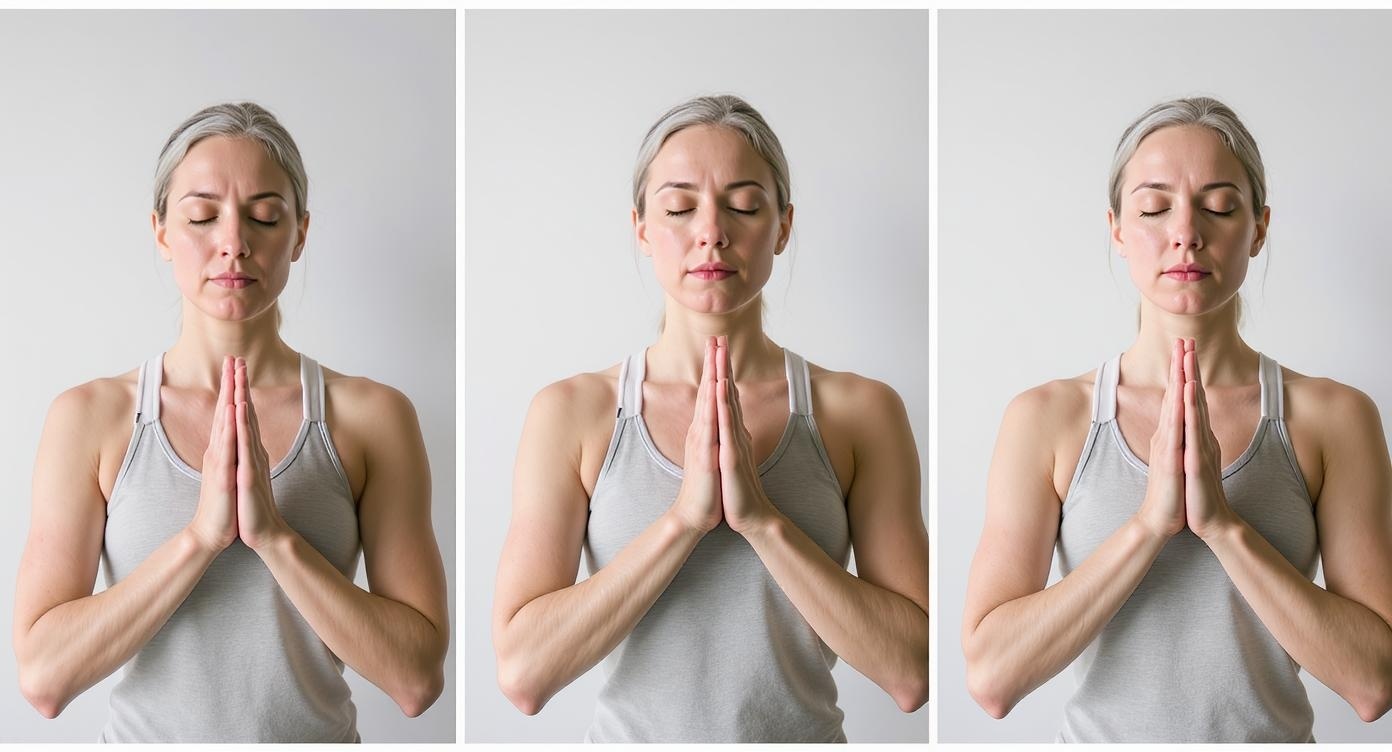
Visual guide to proper Breath of Fire technique and posture
The Master's Method: How to Practice Breath of Fire Like a Pro
Most online tutorials skip the crucial foundation steps. Here's the complete system:
Phase 1: Foundation Building (Week 1-2)
Setup Position:
- Sit with spine straight, shoulders relaxed
- Place one hand on chest, one on belly
- Close your eyes and breathe naturally for 1 minute
Basic Pattern Practice:
- Begin with normal breathing
- Start making your exhales slightly more forceful
- Let inhales happen naturally (passive)
- Feel your belly hand moving in and out with each breath
- Practice for 30 seconds, rest for 30 seconds
- Repeat 3 times
Key Principle: The chest hand should barely move. All action happens from your core.
Phase 2: Rhythm Development (Week 3-4)
Tempo Building:
- Start with 1 breath cycle per second
- Maintain equal inhale/exhale timing
- Gradually increase to 1.5 cycles per second
- Practice for 1 minute, rest for 1 minute
- Complete 3 rounds
Phase 3: Mastery Integration (Week 5+)
Advanced Practice:
- Build to 2-3 breath cycles per second
- Practice for 3 minutes continuously
- Add mudras (hand positions) if desired
- End with 30 seconds of natural breathing
- Notice the subtle energy sensation afterward
Pro Tip: Form over speed, always. A slower, perfectly executed practice beats rushed, sloppy technique every time.
Critical Safety Protocols: When NOT to Practice
This is where most articles fail you. They mention contraindications in passing. But your safety requires absolute clarity:
Absolute Contraindications (Never Practice If You Have):
- Active pregnancy or menstruation
- Heart conditions or high blood pressure
- Recent abdominal surgery
- Spinal disorders (herniated discs, severe scoliosis)
- Respiratory infections or asthma attacks
- Epilepsy or seizure disorders
- Detached retina or glaucoma
- History of stroke
Universal Warning Signs to Stop Immediately:
- Dizziness or lightheadedness
- Chest pain or tightness
- Nausea or headaches
- Tingling in hands or face
- Any discomfort whatsoever
Listen to your body like your life depends on it—because it does.
The 5 Deadly Mistakes That Kill Your Progress
Mistake #1: Speed Over Substance
Most beginners try to breathe as fast as possible. This leads to hyperventilation and discouragement. Start slow, build systematically.
Mistake #2: Chest Breathing
If your chest is moving more than your belly, you're doing it wrong. The power comes from your core, not your ribcage.
Mistake #3: Forcing the Inhale
The inhale should be passive—a natural result of your exhale. Don't suck air in; let it flow naturally.
Mistake #4: Practicing Too Long Too Soon
Jumping to 5-10 minute sessions before building capacity causes burnout and potential injury. Respect the progression.
Mistake #5: Ignoring Your Body's Signals
Your body gives you feedback constantly. Ignore it at your peril. When in doubt, stop and rest.
Create the ideal environment for your Breath of Fire practice
Your 30-Day Transformation Protocol
Here's your exact roadmap to mastery:
Week 1-2: Foundation
- Days 1-7: 30 seconds practice, 30 seconds rest, 3 rounds
- Days 8-14: 45 seconds practice, 30 seconds rest, 3 rounds
- Focus: Perfect technique, zero speed
Week 3-4: Building
- Days 15-21: 1 minute practice, 30 seconds rest, 3 rounds